
Water heater and AC leak water damage in Fort Worth
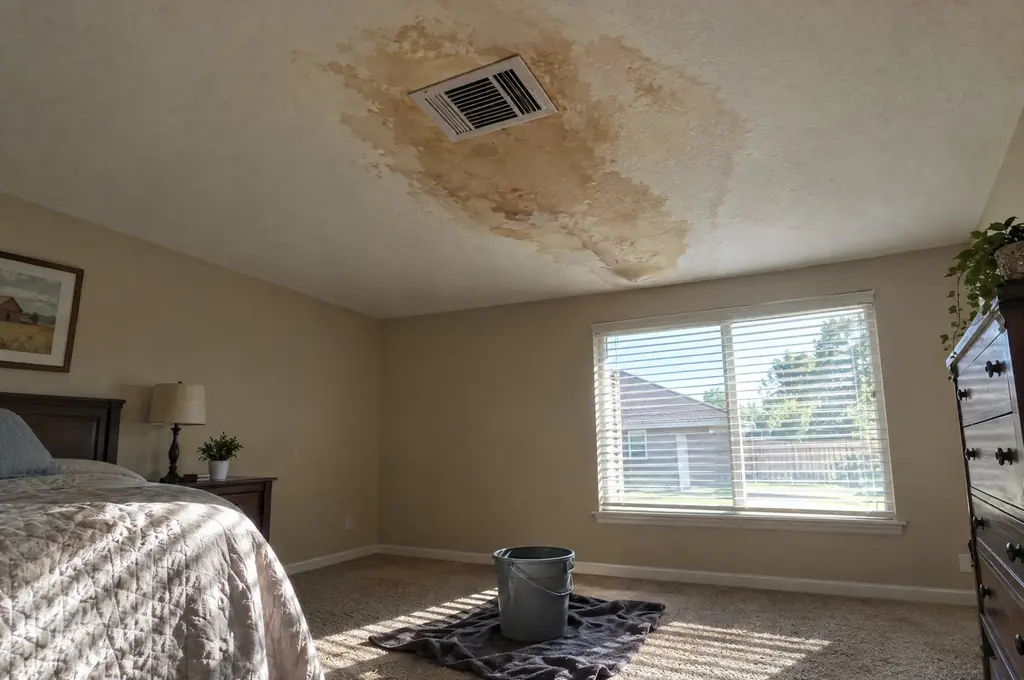
Water heater and AC leaks in Fort Worth usually show up as water spreading from a garage or closet heater, or as a ceiling stain under the attic air handler when its drain line clogs. Turn the unit off, catch the water, and get the ceiling, insulation and floor dried before mold starts.
Your call is connected with an independent local water damage company, chosen by a call network; ask what it handles before work starts. Water category: category 1 (clean water) from a supply line or condensate; category 2 if it sat for days.
Where a water heater leaks tells you what comes next. Water from the pipe running down the side of the tank comes from the temperature and pressure relief valve; water at the drain valve near the bottom, or at the pipe fittings above the tank, is usually a part a plumber can replace; water seeping from under the tank itself usually means the tank has rusted through and has to be replaced.
The EPA's moisture guide asks homeowners to keep air conditioner drip pans clean and the drain lines open and flowing. In a Fort Worth summer the system can run for weeks without stopping, so a stopped line fills the pan and spills into the ceiling fast.
Right now
- 1For a water heater: close the cold supply valve above it and turn off its gas or breaker.
- 2For an AC leak: switch the system off at the thermostat until the drain line is cleared.
- 3Put a bucket under the drip and a towel around it; if the ceiling bulges, ease the water out with a small hole at the low point.
- 4Move bedding, electronics and furniture out from under the stain.
- 5Take dated photos of the unit, the stain and the floor for your own records.
Fort Worth and Texas facts for this problem
The EPA's moisture advice is to keep air conditioner drip pans clean and the drain lines unobstructed and flowing.
Source: A Brief Guide to Mold, Moisture and Your Home (EPA).
The EPA's target is indoor relative humidity under 60 percent, ideally somewhere from 30 to 50 percent.
Source: A Brief Guide to Mold, Moisture and Your Home (EPA).
Fort Worth's official record logged 71 days of 100°F or hotter in 2011, and an average of 21 a year over the last ten full years, long stretches when an attic air handler never rests.
Source: ACIS daily record, official Dallas/Fort Worth climate record, calculated by Fort Worth Water Damage & Mold on November 18, 2026.
TDI says sudden water damage is usually covered by home policies, while damage from slow leaks that went on for weeks usually isn't.
Source: When are water damage and mold covered by insurance? (Texas Department of Insurance).
Fort Worth Water's 24/7 line for a break in the street is 817-392-4477, option 1; a leak inside the house is the owner's.
Source: City of Fort Worth: Water department (contact and emergencies).
The median home in ZIP 76164 was built in 1942, the oldest median among the Fort Worth ZIPs on this site; in 76177 it is 2013 (Census ACS 5-year).
Source: U.S. Census Bureau, ACS 5-year, tables B25034 and B25035, calculated by Fort Worth Water Damage & Mold on November 13, 2026.
The EPA asks homeowners to keep air conditioner drip pans clean and the drain lines open and flowing, because a clogged line is a steady source of indoor moisture. In a Fort Worth summer the air handler runs for weeks without a break, so a stopped line fills the pan fast.
Sources: A Brief Guide to Mold, Moisture and Your Home (EPA)
Related on this site: the Fort Worth weather page for today's humidity and dew point, and the Fort Worth water damage numbers for how many 100°F days the city logs.
How the work usually goes
1.Unit fixed
A plumber or HVAC technician replaces the tank or clears and repairs the condensate drain and pan.
You: Ask what failed and keep the paperwork.
2.Ceiling and insulation
Wet attic insulation is removed and ceiling drywall that sagged or stays wet is cut out.
You: Keep the attic hatch closed while drying runs.
3.Floors and walls
Carpet pad usually comes up; walls below the leak are checked with a meter.
You: Move what's in the room to a dry space.
4.Drying
Air movers and dehumidifiers run, with readings each day, until every material is dry.
You: Leave the equipment running.
5.Repairs
New drywall, paint and flooring follow once the readings are normal.
You: Keep the readings and photos together.
How insurance usually treats it
A water heater that splits or an AC pan that suddenly spills is usually treated as sudden water damage under a Texas home policy. TDI notes that damage from a slow leak that went on for weeks is usually excluded, and the heater or air handler itself is a separate repair.
General information, not insurance advice; the policy itself decides. More on the Fort Worth water damage insurance page.
What changes the size of the job
- Whether the leak came through a ceiling, which brings in insulation and drywall
- How long the pan overflowed or the tank leaked before it was found
- Carpet, laminate or tile under the leak
- Number of rooms below the unit
- Drying days and equipment needed
No prices on this site. A company measures moisture on site and writes an itemized estimate; the water damage estimator lists what that estimate should include.
Questions people ask about water heater and ac leaks
Why does my AC leak through the ceiling in summer?
The air handler pulls water out of humid air and sends it down a drain line. When the line clogs, the pan fills and spills into the ceiling. The EPA advises keeping drip pans clean and drain lines flowing.
My water heater burst in the garage. Is that a big job?
A garage tank on a slab often leaves less damage than one in an attic, but water can still run under the wall into the house. A moisture meter on the inside wall and floor tells you quickly.
Can I wait a few days to dry a ceiling stain?
Waiting raises the odds of mold. TDI says mold can start within a day after a leak, and the EPA's guidance is to dry wet materials within 24 to 48 hours.